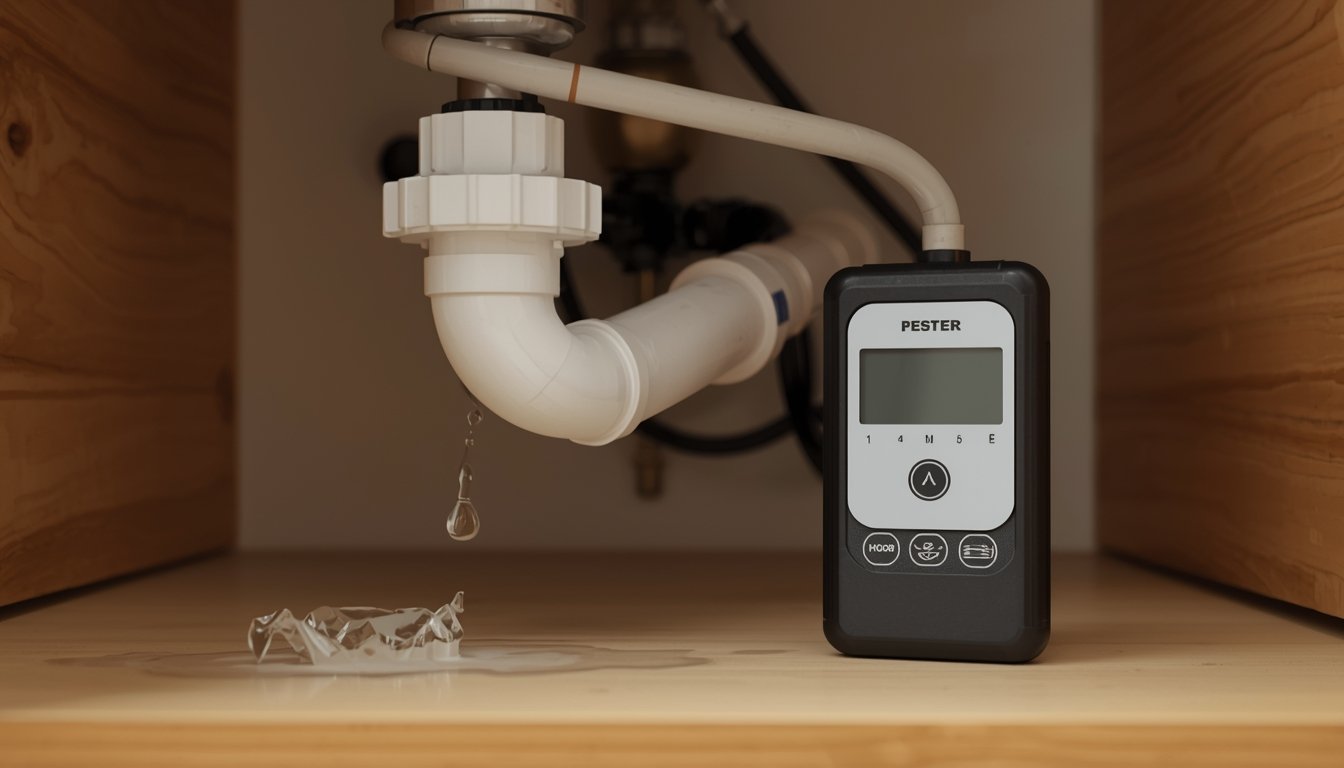
Hidden water leaks often show subtle signs before becoming serious problems, such as damp patches, musty smells, rising water bills, or unexplained sounds of running water. These leaks usually occur behind walls, under floors, or in ceilings, making early detection important to prevent structural damage.
Common Signs That Indicate a Hidden Water Leak
Hidden leaks rarely stay completely unnoticed. In most homes, they create visible or noticeable changes that point to moisture building up where it shouldn’t be.
One of the most common signs is discoloration on walls or ceilings. This often appears as yellow, brown, or darker patches that slowly expand over time. Paint or wallpaper may also begin to bubble or peel as moisture affects the surface.
Another clear indicator is a persistent musty smell. This usually means moisture has been trapped long enough for mold or mildew to begin forming, even if you can’t see it directly.
Other signs to watch for include:
- Damp or soft spots on floors, walls, or ceilings
- Mold or mildew growth in unexpected areas
- Warping or swelling of wood, laminate, or drywall
- Cracks or damage forming in surrounding materials
These symptoms often develop gradually, which is why hidden leaks can go unnoticed until the damage becomes more obvious.
Less Obvious Clues That Suggest a Leak Is Present
In some cases, the signs of a hidden leak are not immediately visible but can still be detected through changes in how your home behaves.
A sudden increase in your water bill is one of the strongest indicators. If your usage habits haven’t changed but your bill rises, it often means water is being lost somewhere in the system. You can learn more about this in why your water bill suddenly increases and how it connects to hidden leaks.
Another clue is the sound of water running when no taps or appliances are in use. This may be faint and only noticeable when the house is quiet, but it can indicate water moving through pipes continuously.
You may also notice changes in water pressure. A drop in pressure can suggest a leak is affecting the flow within your plumbing system.
Temperature differences can also be a sign. Warm spots on floors may indicate a hot water line leak, while cooler damp areas can point to moisture buildup beneath surfaces.
What to Do if You Notice Signs of a Hidden Leak
If you suspect a hidden leak, the first step is to confirm whether water is actively escaping somewhere in your home.
Start by checking visible areas such as under sinks, around toilets, and near appliances. Even if the leak is hidden, it may still leave clues in nearby accessible areas.
Next, monitor your water usage. Turning off all water fixtures and checking your water meter can help confirm if water is still flowing when it shouldn’t be.
Avoid ignoring early signs. Even small leaks can lead to mold growth, structural damage, and increased repair costs if left untreated.
If the source cannot be identified easily, further investigation may be needed. Detection tools or professional inspection can help locate the problem without causing unnecessary damage.
Taking action early allows you to address the issue before it becomes more serious, keeping repairs simpler and more manageable.
To catch these early, many homeowners rely on smart leak detectors that provide alerts.