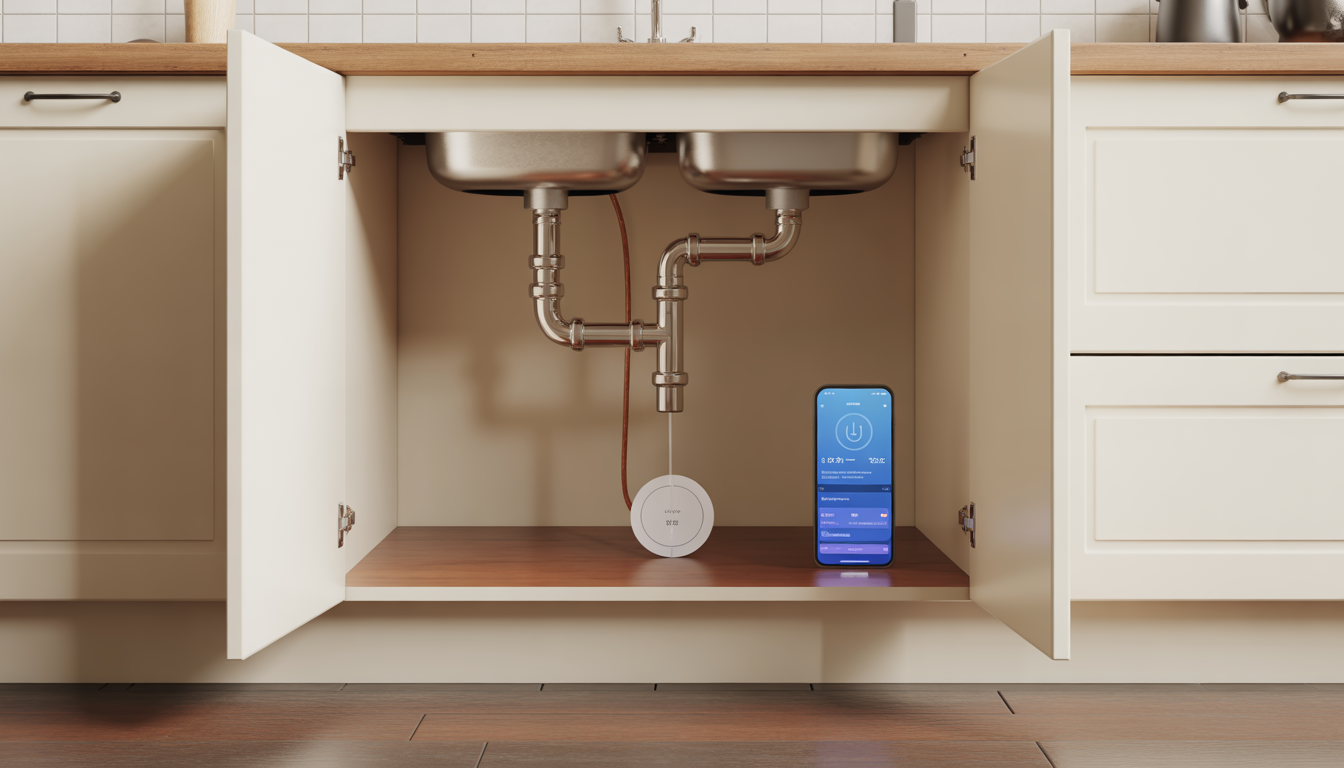
Smart water leak detectors make more sense when you want to know about a leak as soon as it starts, not just when you happen to be nearby. That can be important for kitchens, laundries, basements, utility rooms, and second homes where a small leak could go unnoticed for hours. The main difference between these products is not simply whether they are smart, but how they handle placement, coverage, and the type of alerting they offer for different parts of the home.
Quick Picks
- Best overall for smart alerts in key rooms: TP-Link Tapo T300 Smart Water Leak Sensor
- Best for awkward utility areas and pipe runs: Mengshen WiFi Water Leak Detector with Cable Sensor
- Best for quiet monitoring along larger edges: Eve Water Guard
- Best budget option for simple backup protection: General Tools WA500 Water Leak Alarm
- Best for covering multiple leak-prone rooms at once: 5 Pack Water Leak Detectors for Home (WD60)
TP-Link Tapo T300 Smart Water Leak Sensor

A compact smart sensor built for homeowners who want app alerts in high-risk rooms such as kitchens, laundries, and utility spaces.
This is the most direct fit for the page topic because it focuses on what many people actually want from a smart detector: a notification on their phone when water appears where it should not. In practical terms, that makes it useful for rooms where a leak can develop slowly while no one is around, such as under a sink, behind a washing machine, or near a water heater connection.
It also makes sense when you want smart monitoring without covering a large floor area. Instead of trying to monitor an entire perimeter, it works best as a targeted sensor placed at a known risk point. That gives it a clear role for homeowners who want focused smart protection rather than a wider cable-based setup.
Best for: app-based alerts in kitchens, laundries, and other frequently used risk areas.
Advantage: strong fit for remote awareness in important single-point locations.
Limitation: less suited to wider or awkward layouts unless you add more units.
General Tools WA500 Water Leak Alarm

A simple standalone water alarm for homeowners who want basic leak detection in cabinets, toilet areas, or beside appliances.
This is not a smart WiFi detector, but it still has a place in this comparison because some buyers want to compare app-based products against a lower-cost local alarm. In small spaces where you check regularly, a simple detector can still do the job. That makes it a useful baseline option if your priority is cost rather than remote alerts.
In other words, this is the product that helps clarify whether you really need WiFi in every location. For a cabinet you open often, a standard alarm may be enough. For a second home, basement, or room you rarely check, a smart detector is usually the better fit.
Best for: low-cost backup protection in small spaces you can check easily.
Advantage: simple and direct for basic local warning.
Limitation: no app notification when you are away from home.
5 Pack Water Leak Detectors for Home (WD60)

A multi-pack set designed for households that want to protect several leak-prone rooms instead of focusing on only one sensor location.
This is included here because many people looking for smart water leak detectors are really trying to solve a broader problem: how to monitor multiple rooms without missing one obvious risk area. A multi-pack helps with that planning, even if the appeal is more about coverage than app integration.
It is a useful choice when your home has several straightforward detection points, such as under sinks, behind appliances, near a water heater, and in a laundry. In those cases, wider placement may matter more than advanced features on a single detector.
Best for: covering several leak-prone areas at once throughout the home.
Advantage: strong practical value for multi-room placement.
Limitation: better for broad coverage than advanced smart monitoring features.
Eve Water Guard

A premium leak detector designed to monitor larger areas with an extended sensing cable rather than a single contact point.
This type of detector is a better fit when you want smart monitoring along an edge, behind a line of appliances, or in a larger utility or basement area. Smart alerts matter even more in those locations because the first sign of a problem may not be visible right away. A longer sensing zone can improve your chances of picking up that leak early.
Compared with a compact smart sensor, it is less about targeted point placement and more about broader monitored coverage. That makes it useful in spaces where water might spread before reaching one exact spot.
Best for: larger quiet monitoring zones where water may travel along a floor edge.
Advantage: broader sensing coverage than a point-style smart detector.
Limitation: more specialised than necessary for a simple sink cabinet.
Mengshen WiFi Water Leak Detector with Cable Sensor

A WiFi-enabled leak detector with a cable sensor for hard-to-reach spaces, utility runs, and layouts where a single contact point may miss the leak.
This is one of the stronger use-case fits for this page because it combines WiFi alerts with more flexible placement than a compact point sensor. That matters in real homes where leak risks are not always neat and obvious. Around sump edges, longer pipe runs, or tight service areas, a cable sensor can monitor a path rather than one small spot.
For that reason, it is especially relevant for buyers who already know a standard smart puck-style detector may not match their layout. It keeps the smart alerting benefit while improving coverage in awkward spaces.
Best for: WiFi monitoring in awkward layouts, utility corners, and longer leak paths.
Advantage: smart alerts combined with flexible cable-based sensing.
Limitation: more setup-focused than a compact drop-in sensor.
How to Choose
- Choose a compact smart sensor if you want phone alerts from one or two obvious risk points such as under a sink or behind a washing machine.
- Choose a cable-style smart detector if the leak-prone area is long, awkward, or hidden behind storage or equipment.
- Think about whether you need remote alerts or whether a simple audible alarm is enough for that location.
- Prioritise smart detectors in rooms you do not check often, in second homes, or in areas where damage could spread before anyone notices.
- Do not focus only on features. Placement and coverage style matter just as much as app connectivity.
Final Recommendation
For most homeowners looking specifically for smart water leak detectors with WiFi and app alerts, the TP-Link Tapo T300 Smart Water Leak Sensor is the strongest overall fit because it handles the core job clearly and suits common risk areas such as kitchens and laundries. If your layout is more difficult and you need flexible sensing along a path, the Mengshen WiFi Water Leak Detector with Cable Sensor is the better match. The Eve Water Guard is more suitable for larger quiet monitoring zones, while the General Tools WA500 and the 5 Pack Water Leak Detectors for Home (WD60) help show where a simpler or broader coverage approach may still make sense depending on the room and your budget.