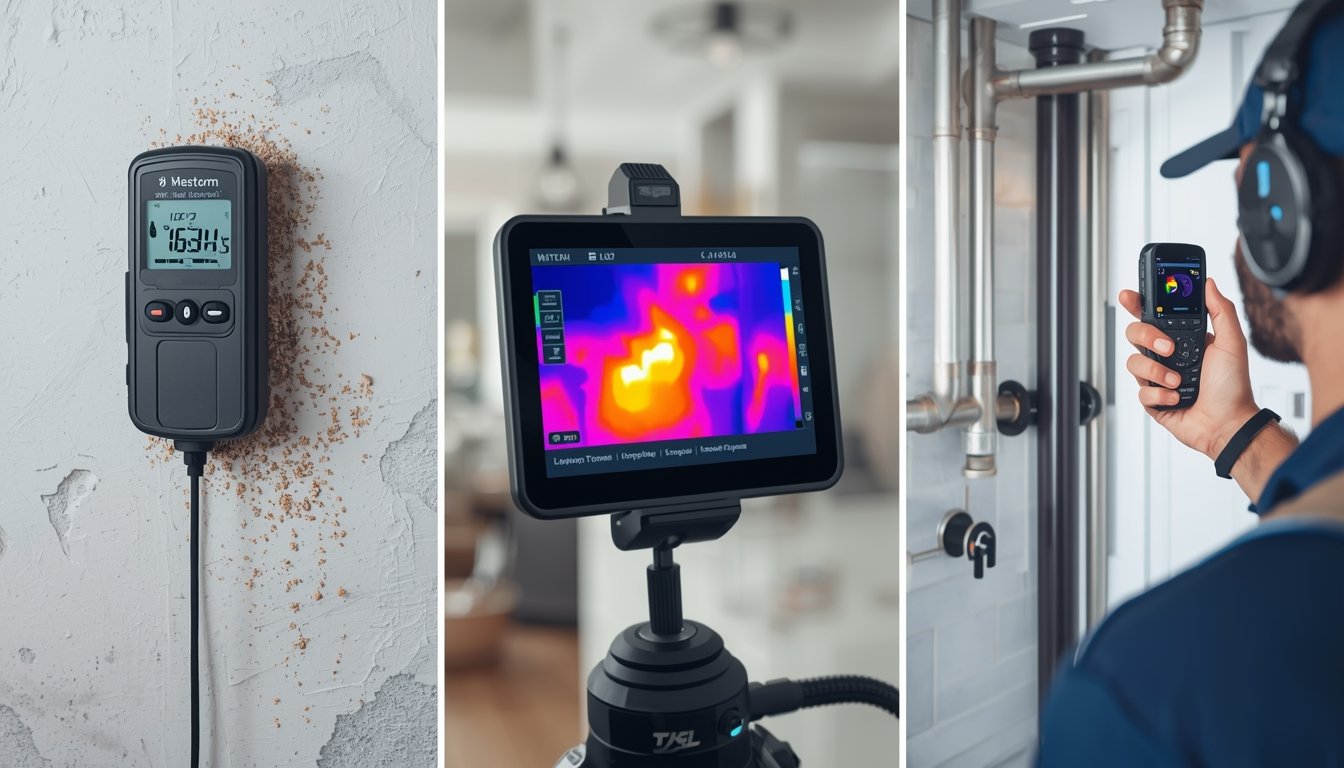
Water leak detection involves identifying where water is escaping from a plumbing system, whether the leak is visible or hidden. In many homes, no single method works in every situation. Different detection methods are used depending on the location of the leak, the severity of the issue, and how accessible the affected area is.
This guide explains the main types of water leak detection methods, how they work, and when each approach is most effective.
What Water Leak Detection Methods Are
Water leak detection methods are the techniques used to locate leaks in pipes, fixtures, or building structures. These methods range from simple visual inspection to more advanced techniques that detect moisture, sound, or temperature changes.
A common issue is assuming that all leaks can be found in the same way. In reality, surface leaks, hidden leaks, and underground leaks often require different approaches.
Why Different Detection Methods Are Needed
Leaks can occur in many different places, including behind walls, under floors, above ceilings, and below ground. Each location presents unique challenges.
- Visible leaks can often be identified through inspection
- Hidden leaks require indirect detection methods
- Underground leaks may require specialized tools
- Slow leaks may not produce obvious signs immediately
In many homes, combining multiple methods provides the most accurate results.
Visual Inspection Methods
Visual inspection is the most basic and often the first step in detecting a leak. It involves looking for signs of water damage or moisture.
- Water stains on walls or ceilings
- Damp or soft flooring
- Mold or mildew growth
- Peeling paint or bubbling surfaces
In many homes, visual inspection helps identify the general area of a leak, even if it does not pinpoint the exact source.
If you are unsure what signs to look for, see What Are the Signs of a Hidden Water Leak for more detail.
Water Meter Monitoring
Monitoring the water meter is one of the simplest and most reliable ways to confirm whether a leak exists.
By turning off all water sources and observing the meter, you can determine if water is still flowing through the system. If the reading changes, a leak is likely present.
In many homes, this method is used as a first confirmation step before further investigation.
Moisture Detection Methods
Moisture detection focuses on identifying damp areas that are not immediately visible. This is particularly useful for leaks behind walls or under flooring.
- Checking walls, ceilings, and floors for moisture
- Comparing damp areas with surrounding dry surfaces
- Identifying patterns of moisture spread
Moisture detection is often used alongside visual inspection to confirm the presence of hidden water.
Thermal Detection Methods
Thermal detection involves identifying temperature differences caused by moisture. Water can change how surfaces retain or release heat, which can reveal hidden leaks.
For example, damp areas may appear cooler or warmer than surrounding materials depending on conditions.
This method is often used when leaks are suspected behind walls or under floors.
Acoustic Detection Methods
Acoustic detection involves listening for the sound of water escaping from pipes. Even small leaks can produce distinct sounds as water moves under pressure.
- Listening for hissing or dripping sounds
- Detecting vibrations in pipes
- Identifying leak locations in underground systems
This method is more commonly used in situations where leaks are not visible and access is limited.
Water Leak Detector Devices
Water leak detectors are devices designed to identify the presence of water in specific areas. They are often placed near appliances, pipes, or other high-risk locations.
These devices can provide alerts when water is detected, helping to identify leaks early before significant damage occurs.
If you want to understand how these devices work in practice, see How to Use a Water Leak Detector to Find Hidden Leaks.
Pressure-Based Detection
Pressure-based detection involves monitoring changes in water pressure within the system. A drop in pressure can indicate a leak or system failure.
In many homes, sudden pressure loss may point to a more serious issue that requires immediate investigation.
When a Leak Detection Method Matters Most
The effectiveness of each method depends on the situation.
- Visual inspection is best for obvious leaks
- Moisture detection helps locate hidden damp areas
- Thermal methods are useful for concealed leaks
- Acoustic detection is effective for underground or inaccessible leaks
- Water meters confirm whether a leak exists
A common issue is relying on only one method. In many homes, combining methods leads to faster and more accurate results.
Common Mistakes When Choosing Detection Methods
Many people assume that one method will identify all leaks, but different situations require different approaches.
- Relying only on visual inspection
- Ignoring subtle signs of moisture
- Using tools without understanding their limitations
- Delaying investigation after early warning signs
In many homes, effective detection depends on using the right method for the specific situation rather than applying a single approach to every problem.
What Matters Most When Detecting Water Leaks
The most effective approach to leak detection is understanding that different methods serve different purposes. No single method works in every scenario.
In most homes, combining visual inspection, water meter checks, and basic detection tools provides a reliable way to locate leaks early and accurately.
Choosing the right method depends on where the leak is likely located, how severe the issue is, and how accessible the affected area is.