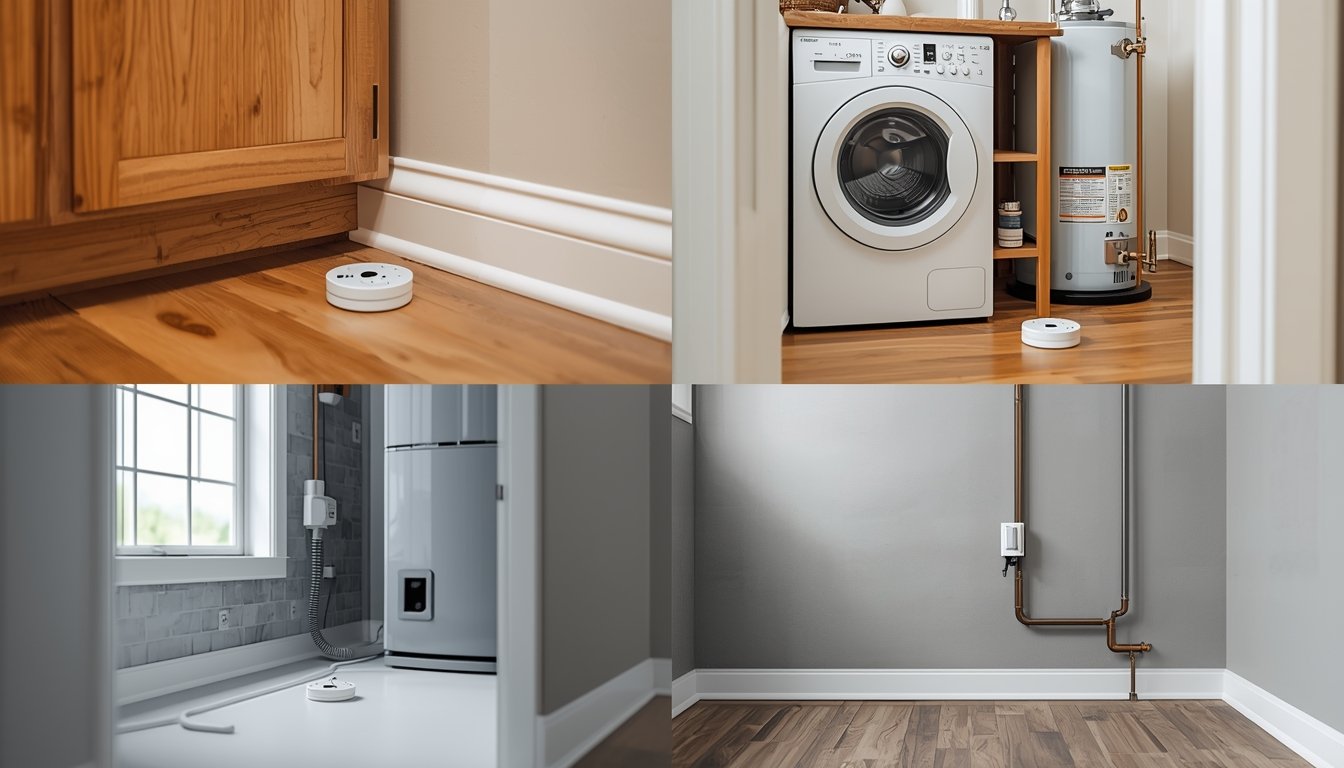
Whole-house water leak detection is less about monitoring one single drip point and more about protecting several high-risk areas across the home at the same time. A whole-house setup can include kitchens, bathrooms, laundries, basements, utility spaces, and appliance zones where small leaks can start unnoticed. The best system for this kind of coverage depends on whether you want multiple standalone detectors, broader cable-style sensing, or smart alerts that help you keep an eye on the house when you are not nearby.
Quick Picks
- Best overall for whole-house protection: 5 Pack Water Leak Detectors for Home (WD60)
- Best for long utility runs and wider monitored areas: Eve Water Guard
- Best for awkward layouts across multiple risk zones: Mengshen WiFi Water Leak Detector with Cable Sensor
- Best budget option for adding extra coverage points: General Tools WA500 Water Leak Alarm
- Best for remote alerts in one priority room: TP-Link Tapo T300 Smart Water Leak Sensor
5 Pack Water Leak Detectors for Home (WD60)

A multi-pack leak detector set designed for homeowners who want to place protection in several rooms and appliance areas from the start.
This is the strongest fit for a whole-house page because whole-house protection usually means multiple risk points, not one premium detector in one spot. A kitchen sink, dishwasher area, washing machine, water heater, bathroom vanity, and basement corner can all be worth monitoring. A multi-pack matches that reality better than a single detector.
It is positioned here as the most practical overall system because it lets you create immediate coverage across several parts of the house. Even if each sensor is simple, broad placement is often more valuable than advanced features concentrated in only one location.
Best for: households that want practical leak coverage across several rooms at once.
Advantage: easier to build full-home coverage without piecing together separate purchases.
Limitation: individual units are less specialised than smart or cable-based systems.
Eve Water Guard

A premium cable-style detector suited to longer wall lines, utility runs, and areas where water may travel before becoming obvious.
For whole-house planning, this product makes sense when part of your home needs broader monitored coverage than a simple point detector can provide. Utility rooms, basement wall edges, and appliance runs are common examples. A longer sensing cable helps in those areas because leaks do not always pool neatly in one exact place.
It is not the best whole-house solution on its own, but it is a strong component in a more complete home protection setup. That is why it fits this page as the option for long monitored zones within a larger house-wide plan.
Best for: longer leak-prone runs within a broader whole-house setup.
Advantage: better monitoring range along walls and edges than a point-only sensor.
Limitation: it covers one broader zone rather than several separate rooms.
Mengshen WiFi Water Leak Detector with Cable Sensor

A WiFi-enabled cable sensor designed for homeowners who want remote alerts in awkward spaces and more flexible coverage than a compact detector.
This is useful in a whole-house system when some of the house is easy to monitor with point detectors and other parts are not. Tight utility corners, sump-related areas, longer pipe paths, and awkward storage-adjacent spaces can all benefit from cable sensing. Adding WiFi alerts makes it more useful in parts of the home that are checked less often.
It fits here as the flexible option for homes with mixed monitoring needs. Rather than using the same detector everywhere, it helps cover the harder spaces that do not suit a simple drop-in alarm.
Best for: awkward or hard-to-monitor areas within a wider home setup.
Advantage: combines remote alerts with more flexible cable-based coverage.
Limitation: more setup-focused than a simple standalone detector.
TP-Link Tapo T300 Smart Water Leak Sensor

A compact smart detector for one important zone where you want phone alerts rather than relying only on a local alarm.
This is not a full whole-house system by itself, but it still has a role in this comparison because many whole-house setups begin by protecting one or two priority rooms first. It works well in that kind of plan, especially for kitchens, laundries, or utility spaces where an early phone alert is more valuable than a simple siren.
It is positioned here as the smart single-zone choice within a broader home strategy. That makes it useful when you want to add remote notification to a key room without building an all-cable or multi-pack system everywhere.
Best for: one priority room within a larger house-wide monitoring plan.
Advantage: adds remote alerts to a key zone without much complexity.
Limitation: it is not enough on its own for full-house coverage.
How to Choose
- Choose a multi-pack if your main goal is covering several leak-prone rooms and appliance areas throughout the home.
- Choose a cable-style detector if part of your house has longer wall edges, utility runs, or awkward spaces where point sensors are less effective.
- Choose a smart point detector if you want remote alerts in one or two priority areas that matter most.
- Think about whole-house protection as a coverage strategy, not just one device, because different parts of the home can need different detector styles.
- Focus on where leaks are most likely to start first, then match each area to the type of detection that makes the most sense.
Final Recommendation
For most homes, the 5 Pack Water Leak Detectors for Home (WD60) is the best whole-house water leak detection system because it gives you practical coverage across multiple rooms and risk points from the start. If part of the home needs broader edge or utility-run monitoring, the Eve Water Guard is the stronger fit. The Mengshen WiFi Water Leak Detector with Cable Sensor works well for awkward layouts that need both cable sensing and remote alerts, while the TP-Link Tapo T300 is the better choice when you want smart monitoring in one priority room within a wider home protection plan.