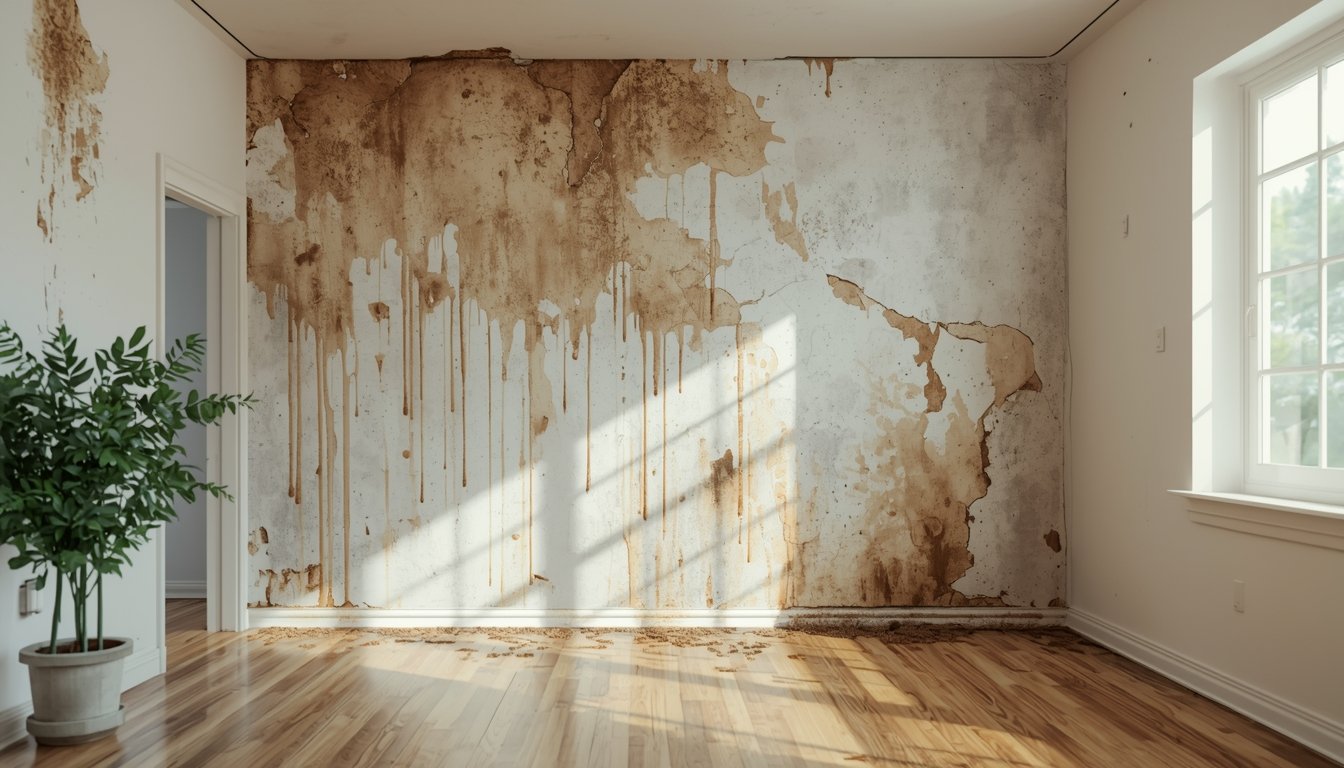
You can detect a ceiling leak by looking for visible signs like stains, bulging areas, or dripping water, and by checking what is directly above the affected spot. Even if water isn’t actively dripping, discoloration or soft patches often indicate that moisture is already present.
Common Signs of a Ceiling Leak
Ceiling leaks usually show clear warning signs before they become severe. One of the most obvious is a water stain, which often appears as a yellow, brown, or darker patch that gradually spreads outward. These stains may change in size depending on how much water is entering the area.
Another sign is a bulging or sagging section of the ceiling. This happens when water collects above the surface and causes the material to weaken. In more advanced cases, the ceiling may feel soft to the touch or begin to crack.
Other signs to look for include:
- Peeling or bubbling paint on the ceiling surface
- Dripping water or damp spots forming below
- A musty smell indicating trapped moisture
- Mold or mildew appearing near the affected area
These symptoms often develop gradually, which means the leak may have been present for some time before becoming noticeable.
You can confirm moisture activity using water leak detection devices.
How to Find Where the Ceiling Leak Is Coming From
Identifying the source of a ceiling leak involves looking at what is located directly above the affected area.
If the ceiling is below a bathroom, kitchen, or laundry, the leak is likely related to plumbing. In these cases, check fixtures such as showers, sinks, and toilets for leaks that may be seeping through the floor above.
If the ceiling is below a roof or attic, the issue may be caused by roof damage. Water can enter through damaged shingles, flashing, or blocked gutters and travel along beams before appearing in a different location.
To narrow down the source, look for patterns:
- Leaks that worsen after rain often indicate a roof issue
- Leaks that appear after using water fixtures suggest plumbing problems
- Consistent damp areas may point to a slow, ongoing leak
If the source is not immediately clear, understanding signs of a hidden water leak can help determine whether moisture is coming from inside walls or other concealed areas.
What to Do When You Detect a Ceiling Leak
Once a ceiling leak is detected, the priority is to stop the source of water before repairing the ceiling itself.
If water is actively dripping, you may need to contain it temporarily using a bucket or by relieving pressure in the affected area to prevent further spreading. This can help limit immediate damage while you locate the source.
Next, inspect the likely origin of the leak based on location. Address plumbing issues by tightening connections or replacing faulty components, and check roof areas for damage if the leak is weather-related.
Avoid repairing or repainting the ceiling until the leak has been fully resolved and the area has dried completely. Covering the stain without fixing the source will only result in the problem returning.
Acting early is key. Ceiling leaks can quickly lead to structural damage, mold growth, and more complex repairs if left untreated. Identifying and fixing the issue as soon as possible helps minimise long-term damage.