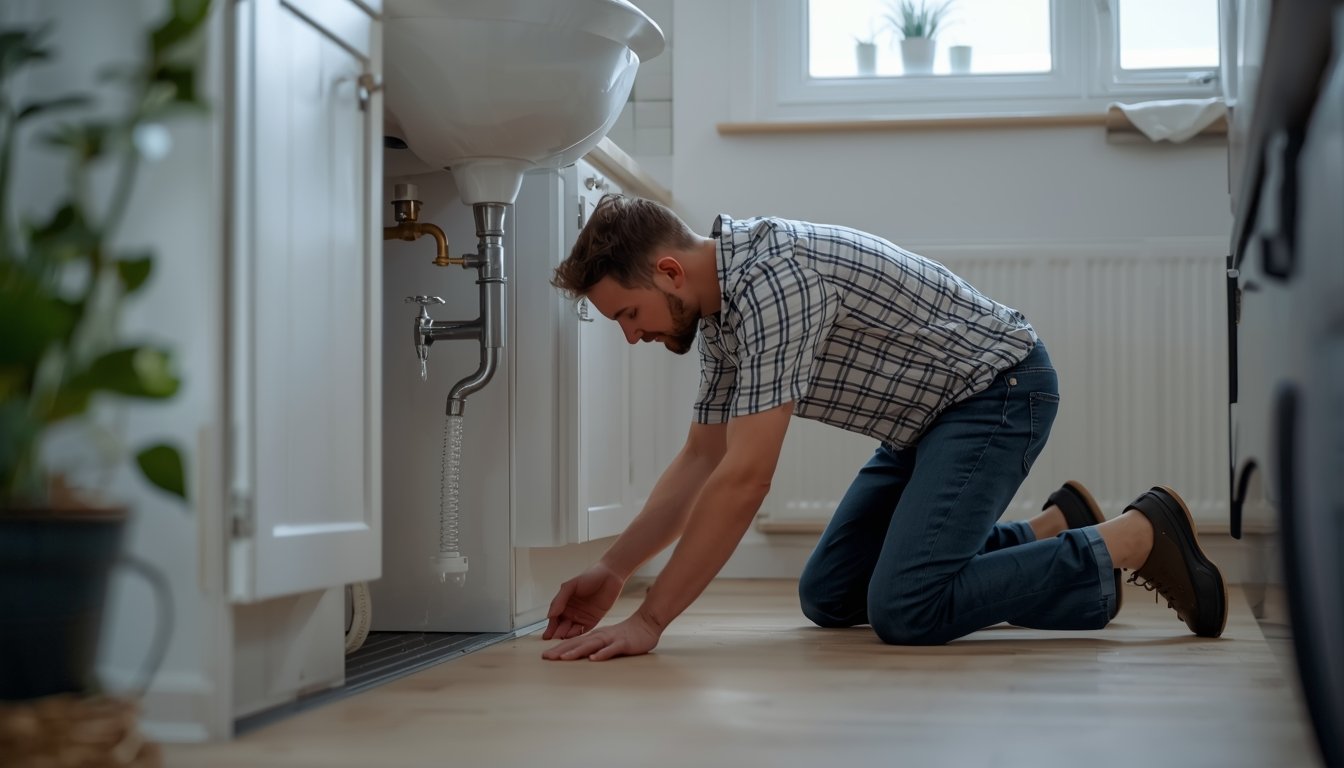
A floor that feels damp in one spot is usually caused by moisture coming from below or nearby, such as a leaking pipe, slab leak, or water seeping through the subfloor. Even if the surface looks normal, that localized dampness is a strong sign that water is present where it shouldn’t be.
What Causes a Floor to Feel Damp in One Area
When only one section of the floor feels damp, it typically points to a specific, localized source rather than general humidity. The most common cause is a plumbing leak beneath the floor, especially in areas near bathrooms, kitchens, or laundry spaces.
In homes with concrete foundations, a slab leak can allow water to rise slowly through the flooring. This often creates a single damp patch that may feel slightly warmer or cooler depending on the pipe involved. Over time, this can lead to damage in flooring materials like wood, laminate, or carpet.
Other possible causes include:
- Leaking pipes running under the floor
- Water seeping up through a cracked slab
- Spills or appliance leaks that have soaked into the subfloor
- Poor ventilation causing moisture buildup in certain areas
If the damp spot is near an exterior wall or ground-level area, it could also be related to water entering from outside. In all cases, the key is that moisture is being introduced from a specific source, not spread evenly across the floor.
How to Identify the Source of the Damp Spot
To find the cause, start by looking at what is directly above and below the affected area. If the damp spot is near plumbing fixtures, there’s a higher chance the issue is coming from a leaking pipe or connection.
Check for patterns. If the dampness increases after using water in nearby fixtures, such as a shower or sink, it strongly suggests a plumbing-related issue. If it appears after rain, the source may be external, such as water entering through the foundation.
You should also look for additional signs:
- A musty smell in the area
- Flooring that feels soft, warped, or slightly raised
- Discoloration or dark patches forming over time
- Warm spots, which may indicate a hot water line leak
If the source is not visible, detection tools can help confirm whether moisture is present below the surface. Recognising broader signs of a hidden water leak can also help determine if the issue extends beyond just one area.
In situations like this, placing a budget water leak detector in the area can help confirm if moisture is spreading.
What to Do About a Damp Floor Area
Once you identify a damp spot, the priority is to stop the source of moisture before the damage spreads.
Start by limiting water use in nearby fixtures if you suspect a plumbing leak. This can help prevent further moisture from building up while you investigate. If the area continues to feel damp, it’s likely that water is still actively entering the space.
Avoid ignoring the problem or simply drying the surface. Even if the top layer dries out, moisture underneath can continue to damage the subfloor and create conditions for mold growth.
If the source is unclear or appears to be coming from beneath the floor, further inspection may be required. This could involve lifting flooring materials or using detection tools to locate the exact problem area.
Acting early is important. A small damp patch can quickly lead to structural damage, flooring replacement, and costly repairs if left untreated. Addressing both the source and the affected area ensures the issue is properly resolved.