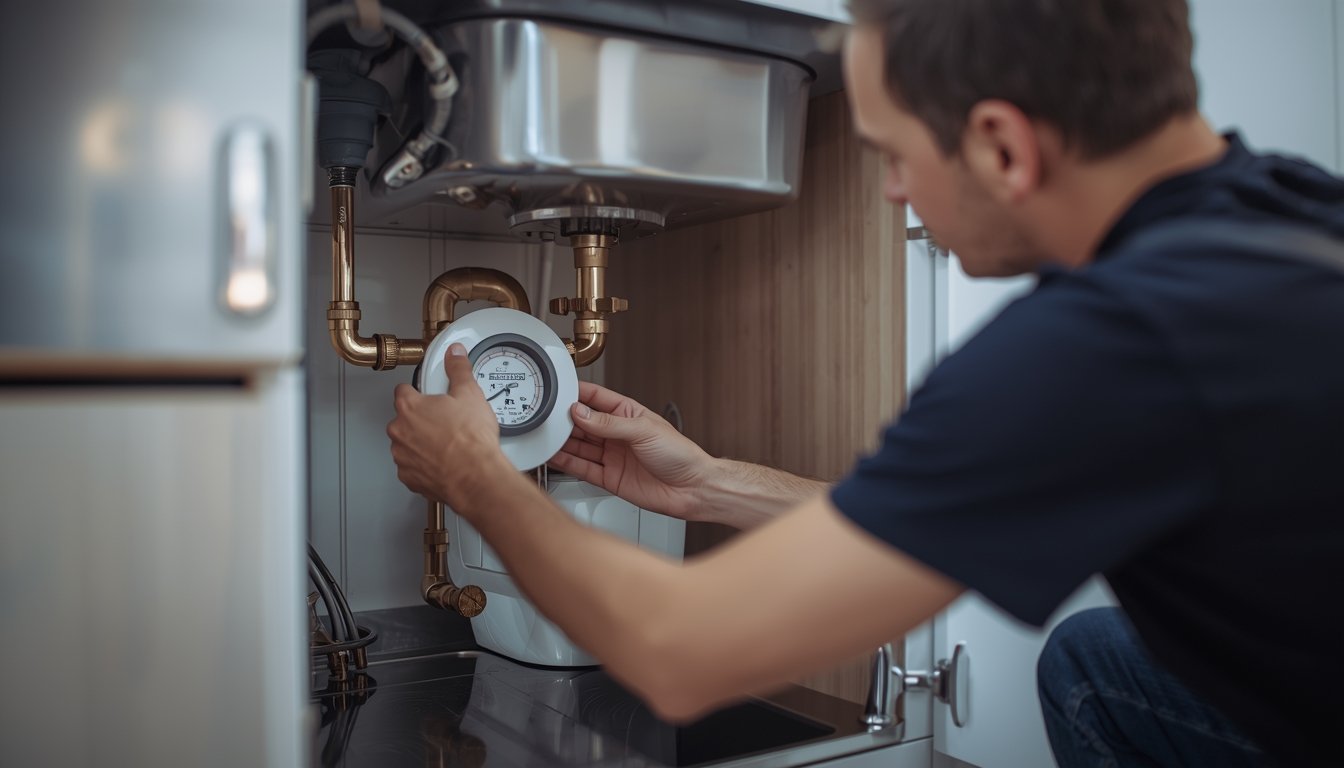
The best way to detect a water leak in a house is to combine simple observation with targeted checks, starting with signs of moisture and confirming the issue using your water meter. In many homes, no single method identifies every leak. Instead, the most reliable approach is to use a step-by-step process that narrows the problem from general symptoms to a specific location.
This approach helps avoid unnecessary damage, reduces guesswork, and allows you to act early before a small issue becomes a major repair.
What Detecting a Water Leak Involves
Water leak detection involves identifying unwanted water escaping from plumbing systems, fixtures, or appliances. Leaks may be visible, such as dripping pipes, or hidden behind walls, under floors, or underground.
A common issue is that water often travels away from the source before it becomes visible. This means the location of damage is not always the location of the leak itself.
In many homes, early detection depends on noticing subtle changes rather than obvious water flow.
Main Causes of Water Leaks in a House
Understanding the likely cause of a leak helps narrow down where to check first. Most household leaks come from common plumbing failure points.
- Worn pipe joints or fittings
- Corrosion in older plumbing systems
- Failed seals around sinks, toilets, and showers
- Damaged appliance hoses or valves
- Cracks in underground or slab pipes
- High water pressure stressing connections
In many homes, leaks begin as slow and minor issues before becoming noticeable problems.
The Best Method: Step-by-Step Leak Detection
The most effective way to detect a leak is to follow a structured process that moves from general signs to specific inspection.
1. Look for Visible Warning Signs
Start by checking for common indicators of moisture or damage.
- Water stains on ceilings or walls
- Damp or soft flooring
- Mold or mildew growth
- Peeling paint or bubbling surfaces
- Musty odors in enclosed spaces
If you are unsure what signs indicate a hidden issue, see What Are the Signs of a Hidden Water Leak for a more detailed explanation.
2. Check the Water Meter
Turn off all water sources in the home and monitor the water meter. If the reading continues to change, it is a strong indication that water is leaking somewhere in the system.
In many homes, this is the simplest and most reliable way to confirm whether a leak exists before investigating further.
3. Focus on High-Risk Areas
Once a leak is suspected, concentrate on locations where leaks commonly occur.
- Bathrooms and shower areas
- Under sinks and inside cabinets
- Around toilets and supply lines
- Near water heaters and appliances
- Basements and crawl spaces
A common issue is overlooking simple sources, such as loose fittings or worn seals, while searching for more complex problems.
4. Listen for Unusual Sounds
Hearing water running when no fixtures are in use can indicate a hidden leak. This is often easier to detect at night when background noise is low.
5. Monitor Water Usage Patterns
An unexpected increase in your water bill can point to a leak that is not visible. In many homes, this is one of the earliest warning signs.
If you notice a sudden change, see Why Does My Water Bill Suddenly Increase for possible causes.
6. Narrow the Leak to a Specific Area
Once general signs are identified, compare them with your home’s plumbing layout. For example, a ceiling stain below a bathroom often points to a leak above that area.
If you suspect the leak is behind a wall, see How to Tell if There Is a Leak Behind a Wall for more focused guidance.
Tools and Approaches That Help
While basic inspection is often enough, tools can help confirm moisture and reduce uncertainty.
- Moisture meters to detect damp building materials
- Water leak detectors to identify the presence of water
- Thermal imaging to reveal temperature differences caused by moisture
- Acoustic tools for certain underground leaks
In most homes, combining simple tools with visual inspection provides reliable results without requiring specialized equipment.
When a Leak Requires Immediate Action
Some leaks pose a greater risk and should be addressed quickly.
- Rapidly spreading water stains
- Sagging ceilings or structural changes
- Strong mold growth or persistent odors
- Sudden drops in water pressure
- Continuous sounds of flowing water
In these cases, delaying inspection can lead to more extensive damage and higher repair costs.
Common Mistakes When Detecting Leaks
A common issue is relying on a single sign or method. Many people assume that visible damage will always reveal the source, which is not always the case.
- Ignoring small stains or damp spots
- Assuming the leak is directly above visible damage
- Skipping the water meter test
- Focusing only on one area without checking others
- Delaying investigation once signs appear
In many homes, successful detection comes from combining several simple methods rather than depending on one approach.
What Matters Most When Detecting a Water Leak
The best way to detect a water leak in a house is not a single technique but a process. Start with visible signs, confirm the issue using your water meter, and then narrow the problem to specific areas using targeted inspection.
In most homes, this structured approach is more effective than relying on tools alone. Careful observation, combined with a basic understanding of where leaks occur, allows you to identify problems earlier and more accurately.